.png)
.png)





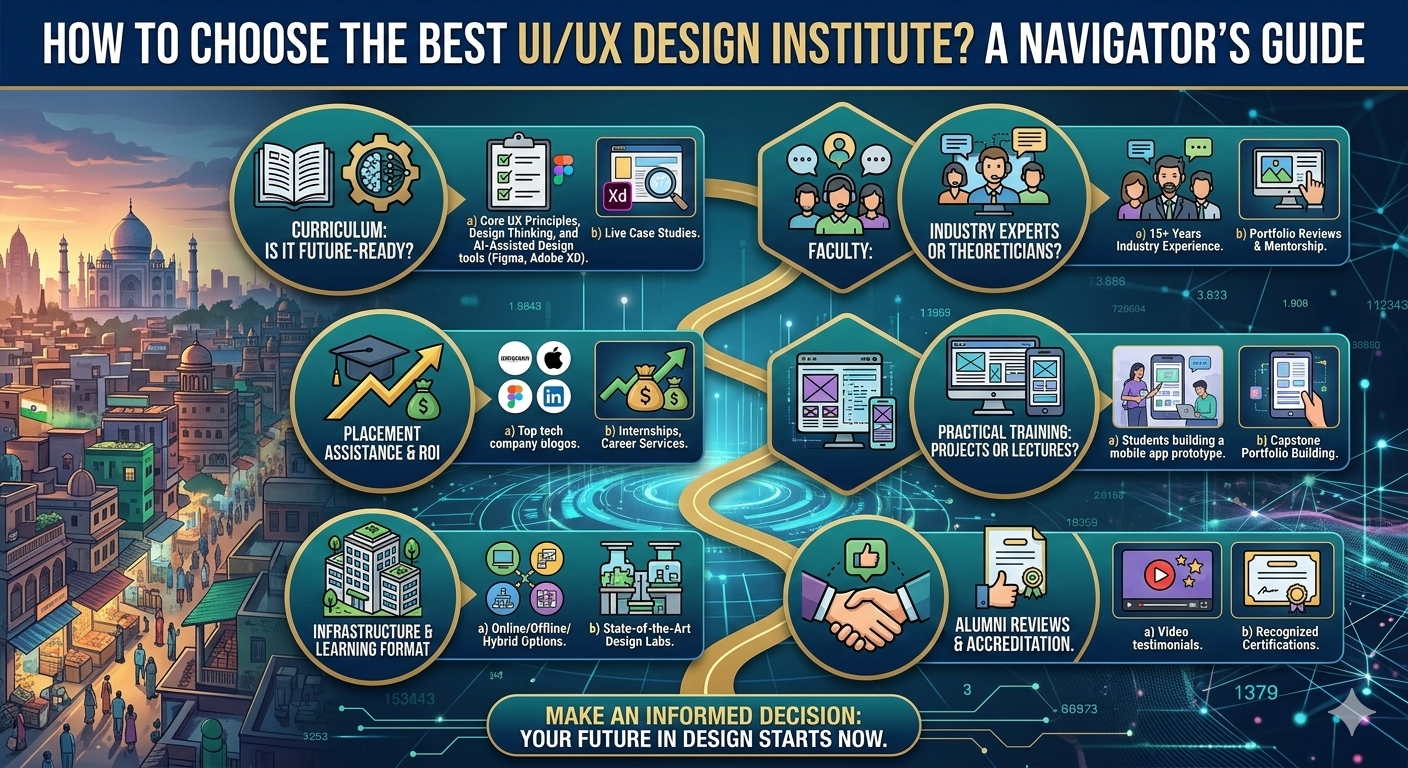
How to Choose the Best UI UX Design Institute in 2026
Define Your Career Goals and Learning Objectives
Identify your target role in UI UX design
Before choosing an institute, pinpoint exactly what you want to become. Are you drawn to visual interface design, user research, or product strategy? Maybe you're interested in specialized areas like AR/VR interfaces or accessibility design.
Understanding your target role helps you filter institutes that excel in your specific area of interest.
Assess your current skill level and experience
Take an honest look at where you stand today. Complete beginners need foundational courses covering design principles and basic software skills.
Career changers might benefit from intensive bootcamps, while professionals looking to upskill could focus on advanced programs. Your starting point determines which institutes can best serve your learning needs.
Determine preferred learning format and timeline
Consider how you learn best and what fits your schedule. Full-time programs offer immersive experiences but require significant time commitment. Part-time evening classes work well for working professionals.
Online courses provide flexibility but demand strong self-discipline. Some people thrive in collaborative classroom settings, while others prefer self-paced digital learning.
Set realistic budget expectations
Design education costs vary dramatically, from free online resources to expensive university programs. Factor in tuition, software licenses, hardware upgrades, and potential lost income during full-time study.
Research average salaries in your target role to understand potential return on investment. Many institutes offer payment plans or job placement guarantees that can influence your decision.
Evaluate Curriculum Quality and Technology Integration
Analyze course content relevance to current market demands
The best UI/UX institutes regularly update their curriculum to match what employers actually want. Look for programs that teach design systems, accessibility standards, and mobile-first design principles.
Check if they cover emerging trends like voice interfaces, AR/VR design, and AI-powered design tools that companies are actively seeking.
Assess hands-on project opportunities and real-world applications
Quality institutes provide extensive portfolio-building opportunities through client projects and industry partnerships. Students should work on diverse challenges ranging from mobile apps to enterprise software.
The best programs connect learners with real companies for internships and capstone projects that mirror actual workplace scenarios.
Review software tools and technology stack coverage
Modern UI/UX education must include industry-standard tools like Figma, Adobe Creative Suite, and prototyping platforms.
Strong programs also introduce students to design handoff tools, user research software, and basic front-end coding. The technology stack should reflect what design teams actually use in 2026.
Compare theoretical knowledge versus practical skill development
While design theory matters, the most valuable programs emphasize hands-on learning over lengthy lectures. Look for institutes that dedicate at least 70% of class time to practical exercises, workshops, and project work.
The best balance combines foundational principles with immediate application through real design challenges.
Investigate Learning Support and Career Services
Examine mentorship programs and instructor accessibility
Strong mentorship programs separate exceptional institutes from average ones. Look for schools offering dedicated mentors who provide personalized guidance throughout your learning journey. Check if instructors hold regular office hours, respond promptly to questions, and offer one-on-one feedback sessions.
The best programs assign industry professionals as mentors who share real-world insights and help navigate career transitions.
Review job placement assistance and career counseling
Comprehensive career services should include resume optimization, interview preparation, and active job placement support. Top institutes maintain partnerships with hiring companies and regularly host recruitment events.
They should provide career counselors who understand the UI/UX job market and offer tailored advice based on your background. Look for programs with high placement rates and transparent employment statistics within six months of graduation.
Assess portfolio development guidance and feedback systems
Portfolio quality directly impacts your job prospects, making guided development essential. Seek institutes offering structured portfolio workshops, regular critique sessions, and iterative feedback processes.
Instructors should help you select your strongest work, craft compelling case studies, and present projects professionally.
The best programs provide multiple review rounds and connect you with industry professionals for external portfolio assessments.
Evaluate networking opportunities and industry connections
Strong industry networks open doors to career opportunities and mentorship relationships. Research which design agencies, tech companies, and startups regularly recruit from your target institute. Look for programs hosting design meetups, guest speaker series, and alumni networking events.
Active connections with local design communities and established relationships with hiring managers significantly boost your chances of landing quality positions.
Check ongoing support after course completion
Post-graduation support demonstrates an institute's commitment to your long-term success. Quality programs offer alumni networks, continued access to career services, and opportunities for skill updates.
Some institutes provide lifetime access to course materials, advanced workshops, and industry updates.
This ongoing relationship helps you stay current with design trends and provides support during career transitions throughout your professional journey.
Test Institute Culture Through Trial and Reviews
Attend free workshops or trial classes when available
Most reputable UI/UX institutes offer free workshops or trial classes to showcase their teaching methods and course quality.
These sessions give you firsthand experience of instructor expertise, class dynamics, and learning environment before committing financially.
Read authentic student reviews and testimonials
Look beyond polished marketing testimonials by checking platforms like Google Reviews, LinkedIn, and education forums.
Current students and recent graduates provide honest insights about course content, instructor support, job placement success, and overall satisfaction with their learning experience.
Connect with current students and recent graduates
Reach out directly through LinkedIn or social media to get unfiltered perspectives on the institute's strengths and weaknesses. Ask specific questions about curriculum relevance, career support effectiveness, and whether they'd recommend the program to others.
Evaluate communication style and responsiveness of staff
Pay attention to how quickly and professionally the institute responds to your inquiries. Their communication approach during the enrollment process often reflects the level of support you'll receive as a student throughout your learning journey.
Finding the right UI UX design institute comes down to matching your personal goals with what each program actually delivers.
Take time to research credentials, dig into their curriculum depth, and see how well they support students beyond just teaching design theory. The best institutes blend current industry practices with hands-on learning, plus they connect you with real career opportunities when you graduate.
Don’t rush this decision – your future design career depends on choosing wisely. If you’re searching for the right offline UI UX Design Institute In Delhi, take your time to explore your options carefully.
Try out demo or trial classes, read genuine student reviews, and compare the course fees with the skills, certifications, and placement support offered. A trusted name like Madrid Software can provide structured training, practical exposure, and industry-relevant projects to help you build real design skills.
Remember, the perfect UI/UX Design Institute In Delhi for you may not always be the most expensive or heavily advertised one. What truly matters is quality training, experienced mentors, hands-on projects, and strong career guidance.
Trust your research, listen to your instincts, and choose a place like Madrid Software where you can clearly see yourself growing into the creative, confident designer you aspire to become.
